
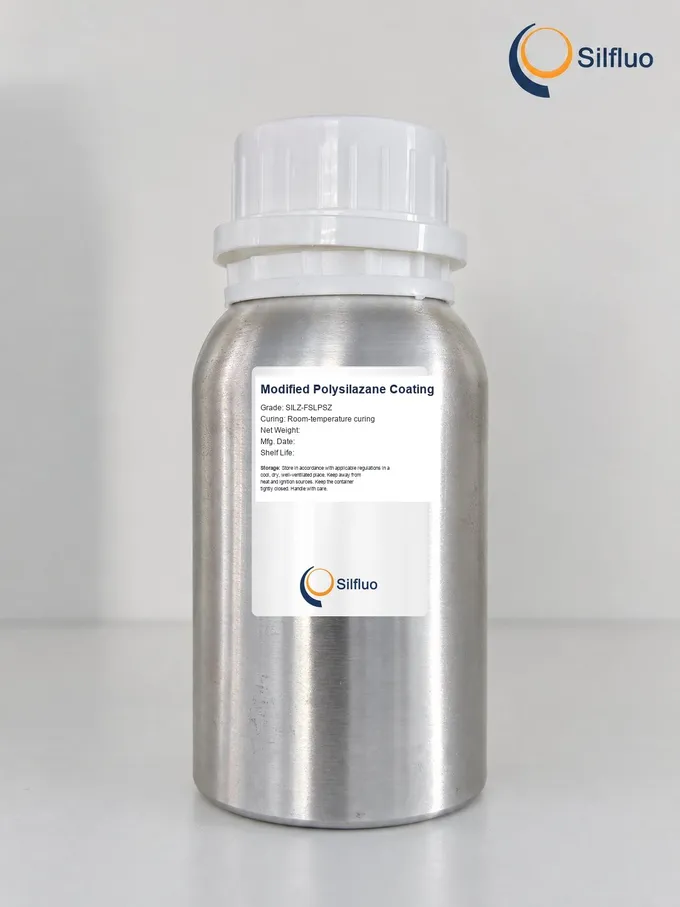
Product Overview
Graphene platelets tile the film into a tortuous barrier while the NCO-terminated polymer locks adhesion, chain extension and crosslinking on air exposure. Abrasion testing at the heavy protocol — 1000 g load, 1000 cycles — costs just 22 mg, and adhesion holds Grade 0 on the cross-cut.
This is the grade for HF-bearing environments — etching lines, fluoride chemistry, glass processing — and for hot mid-concentration acid duty where dilute-spec coatings fail fast. Wear, impact and electrical-insulation demands ride along on the graphene reinforcement.
Key Benefits
Hydrofluoric acid resistance
300 hours in HF without blistering, peeling or rust — the acid that attacks glass and most coatings, answered.
720 h in 25% sulfuric acid
Hot mid-concentration acid endurance validated far beyond dilute-exposure norms.
Graphene-reinforced barrier
Platelet tortuosity slows permeation; the same reinforcement shows up as 22 mg abrasion loss under a 1000 g / 1000-cycle protocol.
6-hour working window
The most forgiving open time among our fluorinated systems — realistic for large-area field campaigns.
Typical Applications
- Heavy-duty anticorrosion for metallic and mineral substrates
- Protective systems requiring wear, impact and electrical-insulation performance
- Acid, alkali, salt and solvent exposure environments
Solution guides: Thin-Film & Chemical-Resistant Anti-Corrosion
Technical Data
| Test Item | Performance Indicator | Test Method |
|---|---|---|
| Coating Appearance | Transparent | Visual |
| Component Type | One-component (graphene-containing, NCO-terminated) | — |
| Density | 1.02–1.13 g/cm³ | Measured |
| Viscosity at 25 °C | 50–70 s (Ford Cup 4) | GB/T 1723-1993 |
| Adhesion (Cross Cut) | Grade 0 | GB/T 9286-1998 |
| Neutral Salt Spray Resistance | 3000 h: no blistering, cracking or rust spots | GB/T 10125-2021 |
| Chemical Reagent Resistance | 50% H₂SO₄ / 50% NaOH / 5% NaCl: 180 h each, no blistering, peeling or rust | GB/T 9274-1998 |
| Hydrofluoric Acid Resistance | 300 h: no blistering, peeling or rust | — |
| Acid Resistance (25% H₂SO₄) | 720 h: no blistering, peeling or rust | GB/T 9274-1988 |
| Abrasion Loss | 22 mg (1000 g / 1000 cycles); 0.019 g (CS10 wheel) | — |
| Coating Solids | ≥45% |
| Theoretical Coverage | 10–15 m²/kg |
| Dry Film Thickness | 30–200 µm |
| Self-Curing | Surface dry 1 h · full dry ≈8 h |
| Heat Cure Option | 120–140 °C, <2 h |
| Working Time | 6 h |
| Recommended Service Temperature | -50 to 280 °C (350 °C instantaneous) |
| Thinner | Alkanes, esters, ethers |
Values from the SILZ-FSLPSZ technical data sheet. Complete TDS with test conditions available on request.
Curing & Processing Guidance
Substrate work follows heavy-duty practice: Sa 2.5 target (minimum St 3), fully degreased and dry. The single component needs no mixing; strain before spraying.
Film design spans 30–200 µm dry; apply within the 6-hour working window. Surface dry arrives in about 1 hour and full dry near 8 hours at ambient; 120–140 °C for under 2 hours when heat is available.
For HF and hot-acid service, verify the full system — film build, edges, welds — with an immersion coupon from your actual bath before rollout. We supply the coupon protocol.
Substrate Compatibility
Metallic and mineral substrates in aggressive chemical service: etching and pickling equipment, fluoride-process housings, chemical-plant steel and concrete. Electrical-insulation and impact-exposed applications are supported by the graphene-reinforced film — describe the duty for a system recommendation.
SILZ-FSLPSZ — Purchasing & Application FAQ
When does FSLPSZ beat its sister product FLPSZ?
When fluoride or concentrated hot acid is in the picture. The HF 300 h and 25% H₂SO₄ 720 h results are FSLPSZ's alone, as is graphene reinforcement for wear and impact. If your exposure is long neutral-salt or bulk immersion instead, the sister grade's 5000 h spray rating and 180-day soak data lead — pick by the chemistry you actually face.
What does NCO termination mean for application?
Isocyanate-terminated chains react on air exposure to extend and crosslink while gripping the substrate — adhesion is built into cure rather than primed on. Practically: keep containers sealed, respect the 6-hour window, and let ambient moisture do its work.
Is the graphene loading electrically conductive?
No — loading is engineered below the percolation threshold, so the film supports electrical-insulation duty while keeping graphene's barrier and mechanical benefits. For specified insulation values, request the dielectric data sheet.
TDS / SDS / COA & Samples
Technical Data Sheet, Safety Data Sheet and batch Certificate of Analysis are available for SILZ-FSLPSZ, and a COA accompanies every shipment. Evaluation samples ship with starting-parameter guidance.
Packaging: Available in 1 kg, 2 kg, 5 kg and 25 kg pails. Keep sealed against ambient moisture; use within the working window once opened.
SDS & batch COA on request · Reply within 1 business day.