
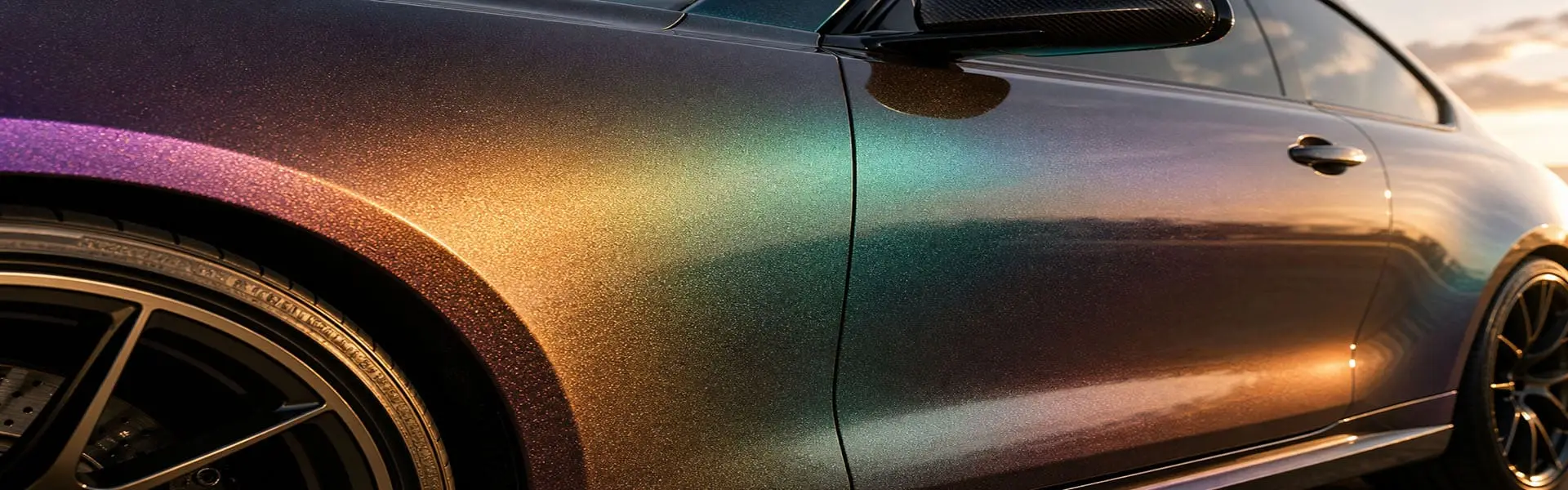
Clear protection is the hardest coating brief: the film must defend the surface — scratches, weather, graffiti, grime — while pretending not to exist. Organic clearcoats yellow and chalk outdoors; hard inorganic treatments need furnace cures; wax-class repellents sacrifice themselves in months.
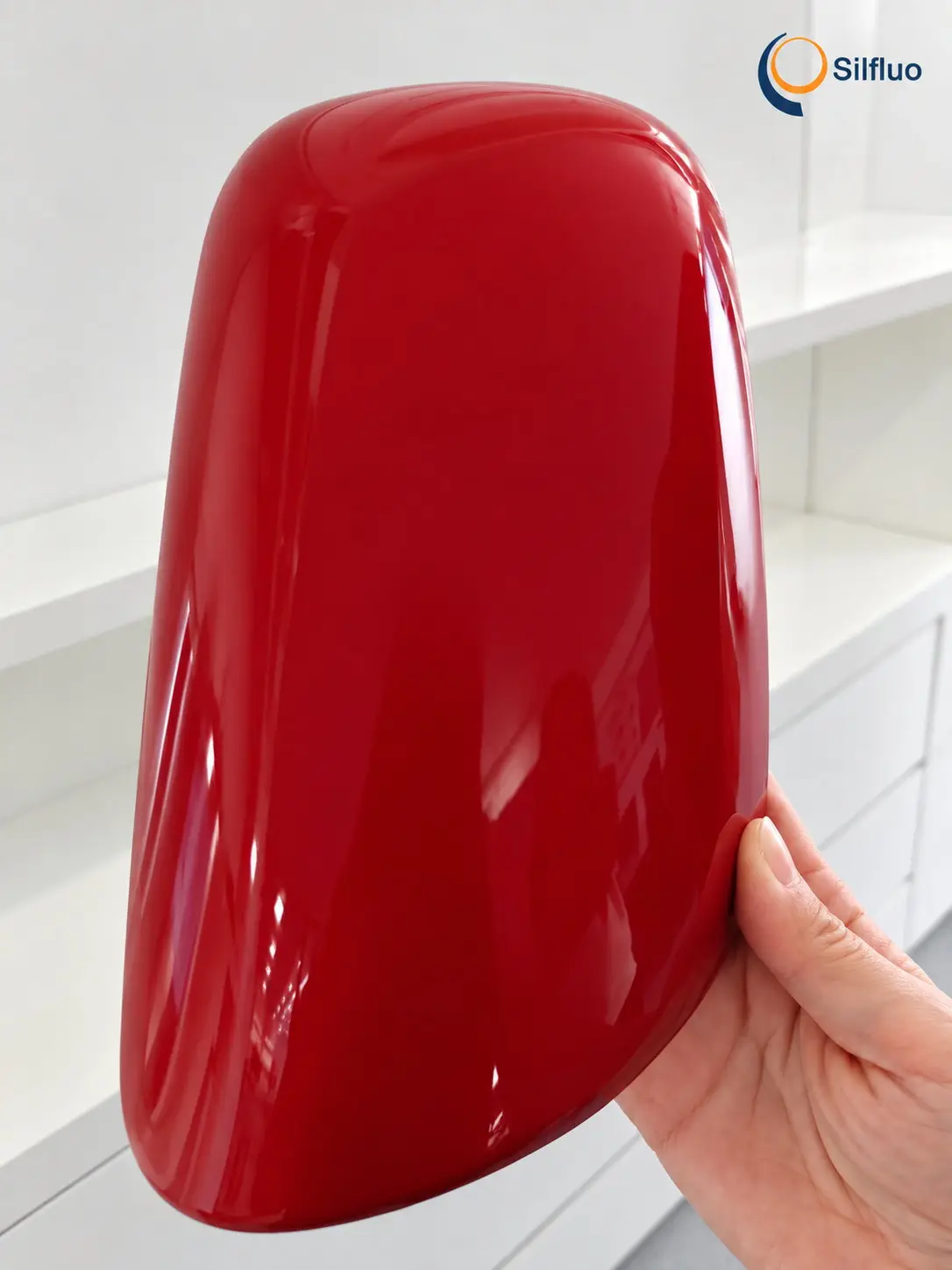
Room-temperature polysilazane clears close the gap. Covalent bonding to glass, metal and ceramic substrates carries pencil hardness from 6H to beyond 8H in an optically clean film that does not yellow — while hydrophobic surface chemistry (water contact angles above 110°) makes water, grime, marker and spray paint release instead of grip.
Two grades split the brief between peak hardness and long-haul endurance — the ≥8H heat-proof clarity of RT7 and the >2000-hour, -50 °C resilience of AAPSZ — both curing ambient, both serviceable outdoors for years.
Service Conditions Covered
| Surface requirement | Optical transparency, non-yellowing outdoors; hardness 6H → ≥8H by grade; water contact angle above 110° |
| Temperature range | Continuous service to 500 °C non-yellowing (RT7); -50 to 280 °C with 400 °C instantaneous (AAPSZ) |
| Substrates | Glass, metals, ceramics, glass-ceramics, PV glass, coated masonry and architectural surfaces |
| Film build | 20–200 µm single-coat windows by grade; one-pass application (cured surfaces repel recoats) |
| Curing options | Full ambient cure (hours to handling, days to full properties) or 150–180 °C accelerated schedules of 20–30 min |
Recommended Products & Why
| Grade | Format | Curing | Service Temp. | Why this grade |
|---|---|---|---|---|
| SILZ-RT7 | — | Surface dry 2 h · full cure >5 d | Non-yellowing to 500 °C long-term; short-term to 800 °C (substrate-dependent) | The hardness flagship: ≥8H, >110° repellency and 500 °C non-yellowing clarity — the ceiling of ambient-cured clear protection. |
| SILZ-AAPSZ | One-component | Room temperature >24 h, or 150 °C <0.5 h | -50 to 280 °C (400 °C instantaneous) | The endurance clear: >2000 h salt spray, 110–115° repellency, a -50 °C cold rating and PV-glass pedigree — the anti-graffiti and easy-clean choice for marine, cold-climate and solar-adjacent duty. |
Format, curing and temperature values from each product's TDS.
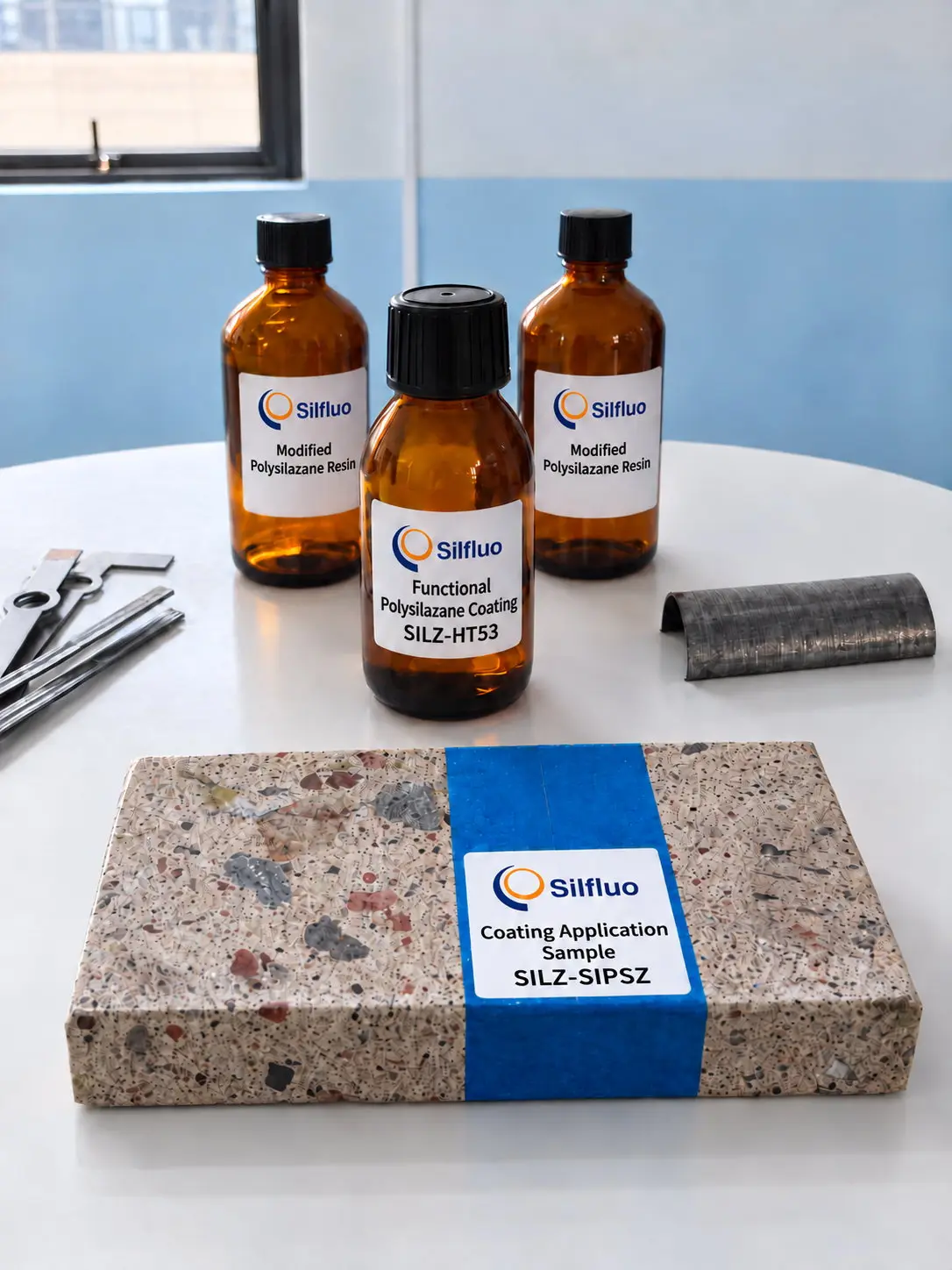
Formulators building proprietary clear systems start from the SILZ-150 resin series — the same room-temperature polysilazane chemistry as neat feedstock (≥6H–7H capability, non-yellowing). See Organopolysilazane Resins; the coatings above are the ready-to-use expressions of that platform.
Samples & Reference Photos
Surface Preparation & Application Principles
On glass and ceramics, preparation is cleaning discipline: fully degrease, remove silicone residues (they defeat wetting), and dry. On metals, the standard Sa 2.5 / St 3 profile applies before any clear system.
Plan one campaign per surface: cured films are hydrophobic and oleophobic by design, so they repel their own recoats. Reach target film in the single specified pass; for later repairs, abrade the repair zone to re-expose a bondable surface.
For anti-graffiti programs, define the cleaning protocol with the coating: solvent wipes matched to the film chemistry remove marker and paint without consuming the surface. Test-patch protocols and cleaner pairings ship with the TDS.
Applicability Boundaries & What We Confirm
- Hardness and endurance peak in different grades — no single clear maximizes both. Rank your spec before choosing (hardness and heat-proof clarity → RT7; repellency, salt-spray endurance and cold service → AAPSZ).
- Transparent films show what they protect: substrate defects and corrosion staining remain visible. Surface quality going in defines appearance coming out.
- Anti-graffiti performance is intrinsic but not absolute: aged, deeply porous or previously painted masonry needs a validated test patch first.
- Optical applications (PV output, display glass) require transmittance validation on your specific substrate and film build — sample panels provided.
- What we confirm: leading surface property, substrate and its preparation state, outdoor exposure class, cleaning regime, and required film life.
Discuss your project with an engineer
Send your substrate, service conditions and current coating problem — we reply with a concrete system proposal within 1 business day.