
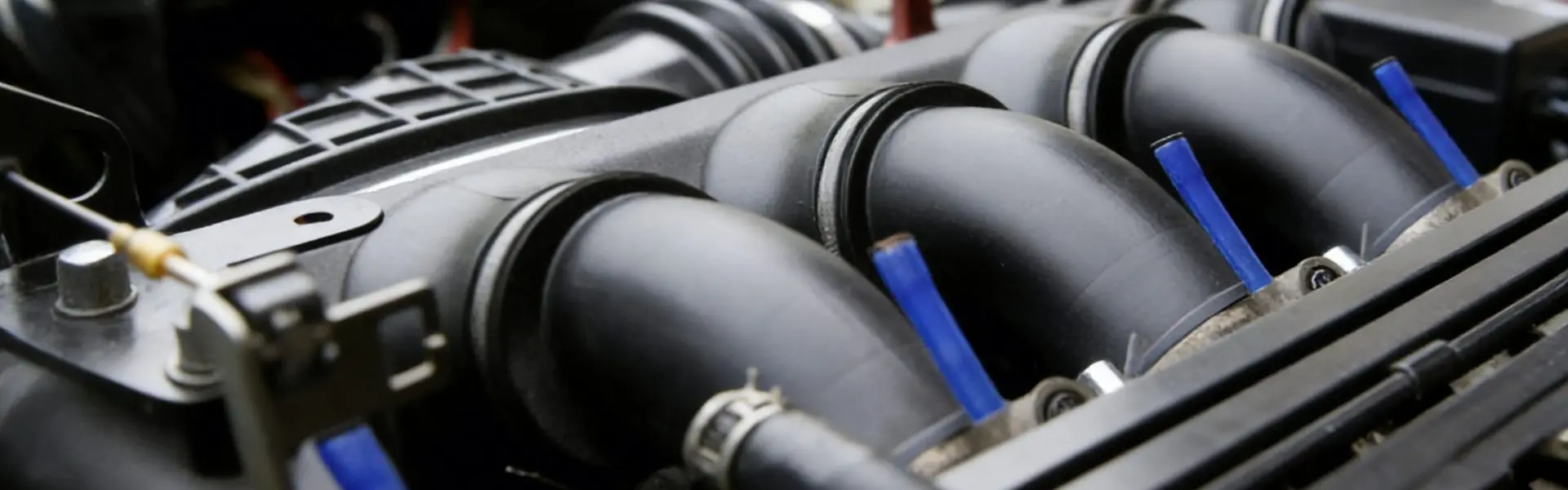
Vehicle electronics are spread across very different locations. A module behind the dashboard stays relatively dry and mild, while an engine control unit or a sensor near the engine or outside the body faces heat, condensation, splash and wide temperature swings through the year. A single coating rarely suits every location, so one vehicle program may specify different chemistries for different modules.
All three Silfluo conformal coatings name automotive electronics in their technical data sheets: the LC-CC1390 silicone series for engine control units and sensor modules, LC-CC7900-150D UV/moisture dual-cure for underhood and outdoor modules, and LC-CC8102 acrylic for automotive boards that may need repair. They differ in service temperature, cure route and film properties, so the choice starts with where the module sits and how your line cures it.
Qualification is set by the vehicle program, not by the coating supplier. This page maps the three grades to typical mounting zones and line setups; the final grade is confirmed by testing on your own boards against your own specification.
Service Conditions Covered
| Assemblies named in the TDS | Engine control units and sensor modules (LC-CC1390 series) · underhood and outdoor modules (LC-CC7900-150D) · automotive electronics boards, including those that need rework (LC-CC8102) |
| Service temperature by chemistry | Silicone LC-CC1390 series: -40 to +200 °C · polyurethane acrylate LC-CC7900-150D: -60 to +135 °C · acrylic LC-CC8102: -40 to +120 °C |
| Shadowed areas | Connector housings, through-hole parts and tall SMD components: LC-CC7900-150D moisture-cures where UV light cannot reach (basic cure about 3 days at 23 °C / 50% RH) |
| Film flexibility | Elongation at break 199% (LC-CC7900-150D) and 20% (LC-CC8102); LC-CC1390 grades range from Shore A 20–30 (LC-CC1394) to Shore A 70–80 |
| Corrosive exposure | LC-CC8102 TDS lists salt spray to IEC 60068-2-52 and resistance to SO2, H2S and Cl2 gases |
| Line setup | UV line: LC-CC7900-150D (minimum 1000 mJ/cm²) · no UV, room-temperature or heat-accelerated cure: LC-CC1390 series · solvent flash-off, tack-free in 5 min: LC-CC8102 |
| Coverage inspection | All three grades carry a fluorescent tracer, checked under a 365 nm blacklight |
| Shipping | Non-dangerous goods: LC-CC7900-150D and LC-CC1397 · dangerous goods: LC-CC1390, 1392, 1394, 1398 and LC-CC8102 |
Recommended Products & Why
| Grade | Type | Cure | Service Temp. | Why this grade |
|---|---|---|---|---|
| LC-CC1390 | Single-component silicone, moisture cure | Atmospheric moisture at room temperature, or accelerated by heat | -40 to +200 °C | Named for engine control units and sensor modules, with the highest upper service limit of the three (+200 °C). Pick soft LC-CC1394 (Shore A 20–30) where a compliant film is preferred around components, or solvent-free LC-CC1397 to avoid solvent handling. |
| LC-CC7900-150D | Polyurethane acrylate, solvent-free | UV cure; moisture cure in shadowed areas | -60 to +135 °C | Named for underhood and outdoor modules. UV light fixes the surface in-line, a secondary moisture cure finishes the film under connector housings and tall parts, and the cured film covers -60 to +135 °C with 199% elongation. |
| LC-CC8102 | Modified acrylic, low-toxicity solvents | Solvent evaporation | -40 to +120 °C | For automotive boards that may be repaired at the plant or in service: the acrylic film is removed with conformal coating remover, is tack-free in 5 minutes, and is specified against salt spray and SO2, H2S and Cl2 gases. |
Table values from each product's TDS; “—” = not listed in that TDS.
Smart meters, appliance boards, LED drivers and micron-thin fluorinated films for connectors and fine-pitch parts are covered on the Electronics & PCB page.
Surface Preparation & Application Principles
Sort modules by mounting zone before choosing a chemistry. Underhood and outdoor modules see the largest temperature swings and the most condensation, so service range and film flexibility come first; for cabin modules, line speed and rework usually decide.
Walk the board for shadowed areas such as connector housings, through-hole leads and tall components. On a UV line, LC-CC7900-150D needs time for its moisture cure: basic cure in about 3 days at 23 °C and 50% RH and ultimate properties in 7–14 days, so plan electrical and environmental tests after that window.
Keep the cure environment for the LC-CC1390 silicones at 20 °C and 40% RH or above. Where takt time is tight, heat accelerates the moisture cure; a 1.25 mm film fully cures in under 24 hours at 25 °C and 60% RH.
Settle the rework policy before qualification starts. If modules are repaired after coating, LC-CC8102 is removed with conformal coating remover so components can be replaced without mechanical damage to the board.
For trials at overseas plants, LC-CC7900-150D and solvent-free LC-CC1397 ship as non-dangerous goods, which keeps sample logistics simple.
Applicability Boundaries & What We Confirm
- No industry or vehicle-maker approvals are claimed on this page. Qualification follows the vehicle program's own specification; we provide TDS data and trial samples for it.
- Thermal cycling, humidity and salt spray results in hours or cycles are not published here; run them on your boards at your target film thickness.
- Battery packs, BMS boards and lighting are not named in the current technical data sheets. Describe the assembly and we will say whether a grade is worth testing.
- Modules that need full encapsulation or structural sealing call for a potting compound; a conformal coating is a thin film that follows the board contour.
- To recommend a grade we need the module type and mounting zone, coating method, UV and oven availability, target film thickness, rework policy and test plan.
Discuss your project with an engineer
Send your substrate, service conditions and current coating problem — we reply with a concrete system proposal within 1 business day.