
Product Overview
It is supplied at 2%, 5% and 10% solids in a non-flammable fluorinated carrier with no flash point. Film build runs 1.0–1.5 µm, 1.0–2.5 µm and 2.0–3.5 µm respectively, and each grade is tack-free within roughly 30 seconds to 2 minutes at ambient conditions. The n-hexadecane contact angle is ≥75° and surface free energy 10–12 mN/m.
Among the LC-FC grades it lists the highest 1% mass-loss temperature, about 280 °C, with a glass-transition temperature of 10–15 °C. Both are thermal-analysis results, not a service rating or proof of reflow compatibility. Zero ODP and RoHS compliant. Check that the yellow indicator is visible, and acceptable, on your substrate color at the film thickness you run.
Key Benefits
Inspection in ordinary light
A yellow tint retained for at least 30 days shows coated and uncoated areas without UV equipment — practical for field service and low-automation lines.
More film per coat
The 10% grade builds 2.0–3.5 µm in one pass, for parts that need a little more film than the clear grades give.
Water and oil repellent
Water contact angle ≥110°, n-hexadecane ≥75° and surface free energy of 10–12 mN/m.
Top thermal-analysis value in the range
About 280 °C at 1% mass loss; treat it as a screening figure and confirm against your own temperature exposure.
Non-flammable carrier
No flash point and a 50–68 °C boiling range, so films dry quickly at room temperature.
Typical Applications
- Visual inspection zones and field-serviceable assemblies
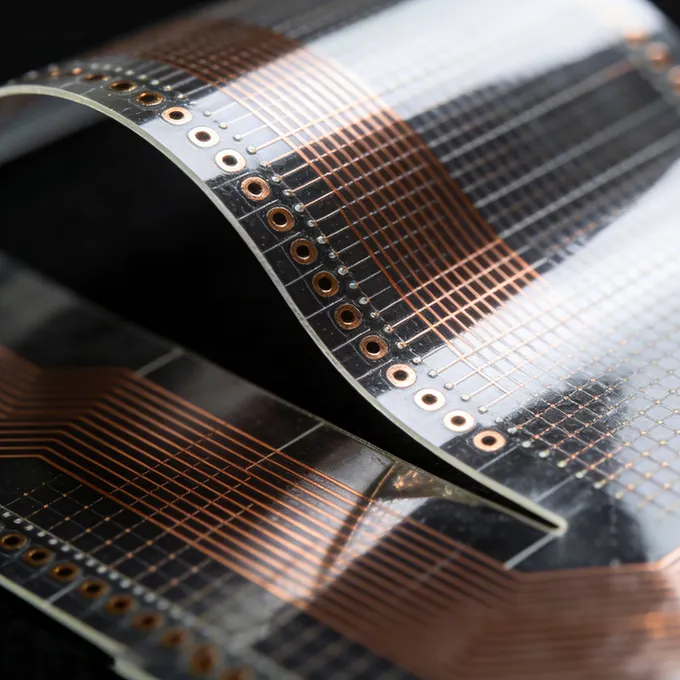
- PCBA and flexible circuit protection against moisture, condensation, dust and oils
- Epilame / lubricant anti-migration treatment for watches, micro-motors, cameras and other precision mechanisms
- Contamination and lubricant-migration barrier for HDD MR read heads
- Precision parts and miniaturized sensors needing a visible coverage indicator
Solution guides: Electronics & PCBPrecision Parts & Watches
Technical Data
| Test Item | Performance Indicator | Test Method |
|---|---|---|
| Film Type | Yellow indicator type | — |
| Active Ingredient / Carrier | Fluoropolymer in non-flammable fluorinated solvent | — |
| Appearance (liquid) | Colorless transparent liquid | — |
| Solid Content Grades | 2%, 5%, 10% (other concentrations on request) | — |
| Dynamic Viscosity, 25 °C | 10–30 mPa·s | — |
| Flash Point / Boiling Range | No flash point · 50–68 °C | — |
| Cured Film Color / Gloss | Yellow · Glossy | — |
| Light Transmittance | >90% | — |
| Inspection Aid | Yellow tint visible in ambient light | — |
| Color Retention Time | At least 30 days | — |
| Static Water Contact Angle | ≥110° | — |
| Static n-Hexadecane Contact Angle | ≥75° | — |
| Surface Free Energy | 10–12 mN/m | — |
| Adhesion | 5B | ASTM D3359 |
| Glass Transition Temperature (Tg) | 10–15 °C | — |
| Thermal Stability (1% mass loss) | ~280 °C | — |
| Dielectric Constant | 3.1 | — |
| Volume Resistivity / Surface Resistivity | >10¹⁴ Ω·m · >10¹⁴ Ω/sq | — |
| Single-Coat Dry Film Thickness (2% / 5% / 10% grades) | 1.0–1.5 / 1.0–2.5 / 2.0–3.5 µm |
| Tack-Free Time, ambient (2% / 5% / 10% grades) | 30 s / 1 min / 2 min |
| Application Methods | Apply by spray, dip, roll or blade coating; stainless-steel or PTFE-lined equipment |
| Environmental | Zero ODP; RoHS compliant |
| Storage Temperature / Shelf Life | 5–35 °C · 24 months unopened |
Values from the LC-FC260 technical data sheet. Complete TDS with test conditions available on request.
Application & Processing Guidance
Apply by spray, dip, roll or blade coating with stainless-steel or PTFE-lined equipment, and set dip withdrawal speed or spray passes in trials on the real part. Use local exhaust ventilation for spray application.
Check coverage by eye once the film is tack-free. The tint is part of the cured film, so decide in advance whether it may stay visible on finished transparent or light-colored parts. Mask electrical contacts unless your process has been validated with the coating, and confirm thermal-cycling behavior to your product test protocol.
Substrate Compatibility
May be evaluated on PCBAs and flexible circuits, field-serviceable assemblies, lubricated parts in precision mechanisms, HDD read heads and miniaturized sensors; adhesion is listed as 5B (ASTM D3359). Indicator visibility varies with substrate color, so test it on your own boards or parts.
LC-FC260 — Purchasing & Application FAQ
How long does the yellow indicator last?
The TDS lists color retention of at least 30 days after cure. Plan coverage inspection within that window; if the tint must not remain on cosmetic parts, consider the clear, fluorescent LC-FC633 instead.
Will the yellow color affect transparent parts?
It can. Light transmittance stays above 90%, but the tint may remain visible on transparent or light-colored parts. Coat sample parts at your production thickness and judge appearance before approving it.
TDS / SDS / COA & Samples
Technical Data Sheet, Safety Data Sheet and batch Certificate of Analysis are available for LC-FC260, and a COA accompanies every shipment. Evaluation samples ship with starting-parameter guidance.
Packaging: 100 g, 500 g, 1 kg and 25 kg packs. Shelf life 24 months from manufacture in unopened containers stored at 5–35 °C, away from sunlight, heat and ignition sources.
SDS & batch COA on request · Reply within 1 business day.