
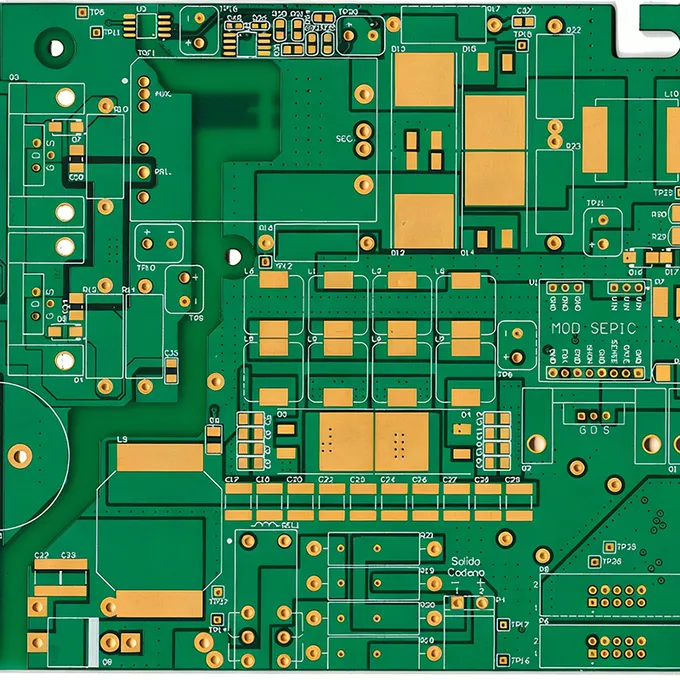
Product Overview
Three solids grades set the film build. LC-FC130-2 gives 0.5–1.5 µm and is tack-free in about 30 seconds, LC-FC130-5 gives 1.0–2.0 µm in about 1 minute, and LC-FC130-10 gives 1.5–2.5 µm in about 2 minutes; other concentrations can be supplied on request. Because the carrier has no flash point and boils at 50–68 °C, drying needs ventilation rather than an oven.
The film resists wetting by water and by oils (n-hexadecane contact angle ≥70°) while keeping light transmittance at 90% or more, so it can be evaluated on LED modules and other parts where a thin, low-gloss treatment must not change appearance. Its melting point of 25–30 °C and 1% mass-loss temperature of about 200 °C are the lowest thermal-analysis values in the series, so confirm suitability for your service and assembly temperatures. Zero ODP; RoHS compliant.
Key Benefits
Matte, low-gloss finish
The colorless matte film adds no visible sheen, for parts where a glossy coating would be noticed.
A few microns per coat
0.5–2.5 µm per coat keeps added thickness small where contacts, clearances and dimensions are tight.
Repels water and oil
Static contact angles of ≥110° for water and ≥70° for n-hexadecane, with surface free energy of 10–12 mN/m.
Dries in seconds, no flash point
Tack-free in 30 seconds to 2 minutes at ambient conditions from a non-flammable carrier, with no heat cure.
Electrical values listed
Dielectric constant 3.1, volume resistivity above 10¹⁴ Ω·m and surface resistivity above 10¹⁴ Ω/sq.
Typical Applications
- PCBA and flexible circuit (FPCA) protection against moisture, condensation, dust and oils
- Water- and oil-repellent surface treatment for LED modules
- Epilame / lubricant anti-migration treatment for watches, micro-motors, cameras and other precision mechanisms
- Contamination and lubricant-migration barrier for HDD magnetoresistive (MR) heads
- Precision parts, MEMS devices and miniaturized sensors needing low film build
Solution guides: Electronics & PCBPrecision Parts & Watches
Technical Data
| Test Item | Performance Indicator | Test Method |
|---|---|---|
| Film Type | Matte type | — |
| Active Ingredient / Carrier | Fluoropolymer in non-flammable fluorinated solvent | — |
| Appearance (liquid) | Colorless transparent liquid | — |
| Solid Content Grades | 2%, 5%, 10% (other concentrations on request) | — |
| Dynamic Viscosity, 25 °C | 10–30 mPa·s | — |
| Flash Point / Boiling Range | No flash point · 50–68 °C | — |
| Cured Film Color / Gloss | Colorless · Matte | — |
| Light Transmittance | ≥90% | — |
| Inspection Aid | None (matte film) | — |
| Static Water Contact Angle | ≥110° | — |
| Static n-Hexadecane Contact Angle | ≥70° | — |
| Surface Free Energy | 10–12 mN/m | — |
| Adhesion | 5B | ASTM D3359 |
| Melting Point | 25–30 °C | — |
| Thermal Stability (1% mass loss) | ~200 °C | — |
| Dielectric Constant | 3.1 | — |
| Volume Resistivity / Surface Resistivity | >10¹⁴ Ω·m · >10¹⁴ Ω/sq | — |
| Single-Coat Dry Film Thickness (2% / 5% / 10% grades) | 0.5–1.5 / 1.0–2.0 / 1.5–2.5 µm |
| Tack-Free Time, ambient (2% / 5% / 10% grades) | 30 s / 1 min / 2 min |
| Application Methods | Apply by spray, dip, roll or blade coating; stainless-steel or PTFE-lined equipment |
| Environmental | Zero ODP; RoHS compliant |
| Storage Temperature / Shelf Life | 5–35 °C · 24 months unopened |
Values from the LC-FC130 technical data sheet. Complete TDS with test conditions available on request.
Application & Processing Guidance
Apply by spray, dip, roll or blade coating; stainless-steel or PTFE-lined equipment is generally suitable. In dip coating, withdrawal speed governs film thickness and uniformity, so fix it in trials on the actual part. Provide local exhaust ventilation for spraying.
Mask electrical contacts unless your assembly process has been validated with the coating. LC-FC130 carries no inspection tracer, so verify coverage on trial parts with water-droplet or contact-angle checks rather than under a UV lamp.
Substrate Compatibility
Can be evaluated on PCBAs and flexible circuits, LED modules, and metal or plastic parts in precision mechanisms; adhesion is listed as 5B (ASTM D3359). Results depend on substrate, surface preparation and film thickness, so confirm adhesion, optical appearance and function on the intended part before production.
LC-FC130 — Purchasing & Application FAQ
Which LC-FC130 grade should I choose?
Choose by film build. LC-FC130-2 (0.5–1.5 µm) gives the thinnest treatment in this product; LC-FC130-5 (1.0–2.0 µm) is the middle option; LC-FC130-10 (1.5–2.5 µm) puts down the most film per coat. Other solids levels can be made on request.
Can LC-FC130 be used as an epilame?
It may be evaluated as an epilame, or lubricant anti-migration treatment, around lubricated components in watches, micro-motors and cameras. Results depend on the lubricant, substrate, surface preparation and film thickness, so run a migration test with your own oil before adopting it.
How does LC-FC130 differ from the other LC-FC grades?
It is the matte grade and has no coverage indicator. LC-FC633 and LC-FC183 add a fluorescent tracer, LC-FC260 adds a yellow tint visible in ambient light, and LC-FC181/183 reach the highest listed oil repellency (n-hexadecane ≥80°).
TDS / SDS / COA & Samples
Technical Data Sheet, Safety Data Sheet and batch Certificate of Analysis are available for LC-FC130, and a COA accompanies every shipment. Evaluation samples ship with starting-parameter guidance.
Packaging: 100 g, 500 g, 1 kg and 25 kg packs. Shelf life 24 months from manufacture in unopened containers stored at 5–35 °C, away from sunlight, heat and ignition sources.
SDS & batch COA on request · Reply within 1 business day.