
A rail vehicle does not start, brake, or shunt as one rigid body. Longitudinal impulses move through the train when traction force changes, when cars are coupled, or when a low-speed collision occurs during shunting. If the draft gear buffer cannot absorb that energy in a controlled way, the result is not only noise or vibration — it affects coupler load, vehicle structure, maintenance frequency, and passenger comfort.
This is why buffer material selection cannot start with hardness alone.
For rail transit draft gear, the more useful questions are: How much impact energy must be absorbed? What impedance force is acceptable? How much stroke is available? What initial pressure can the vehicle tolerate? How quickly must the buffer return after compression?
Phenyl silicone elastic putty is considered in this area because it behaves differently from grease-lubricated ring springs, hydraulic oil, and vulcanized rubber. It is not simply a soft silicone material. It is a high-viscosity, viscoelastic phenyl-modified silicone compound designed to work inside a closed buffer structure.
Why Conventional Draft Gear Systems Reach Their Limits
Most traditional rail buffers are based on grease-lubricated ring spring systems or hydraulic systems. Each has a well-defined failure mode under modern operating requirements.
Ring spring buffers can be too stiff for passenger comfort. Initial pressure in some designs exceeds 100 kN. In a long consist, that means most buffers do not begin working under smaller longitudinal impulses — the load passes through the coupler before the buffer absorbs meaningful energy. The rebound is aggressive, causing repeated longitudinal impacts rather than one controlled compression and recovery cycle.
Grease lubrication creates a secondary problem. When grease ages, dries, or fails under repeated contact stress, ring jamming, scoring, or part damage follows. This shortens inspection and replacement cycles.
Hydraulic buffers address the friction wear problem but introduce persistent sealing concerns. Hydraulic oil viscosity shifts significantly with temperature. Under winter operating conditions, repeated pressure cycling, and long service intervals, sealing integrity and viscosity stability both become design risks.
The common limitation: ring springs are too stiff and too maintenance-dependent; hydraulic systems are difficult to seal reliably across temperature extremes.
What an Elastomeric Paste Buffer Does Differently
An elastomeric paste buffer replaces both the spring mechanism and the hydraulic fluid with a single medium: a high-viscosity, compressible, and flowable silicone-based compound loaded into a sealed cylinder-piston assembly.
The working principle relies on two simultaneous material behaviors.
Compression stroke: The paste is pre-charged into the buffer under controlled pre-pressure. When the piston rod receives impact force, the material is compressed inside the closed cavity and simultaneously forced through an annular gap or orifice around the piston. Impact energy is dissipated through confined deformation, internal viscoelastic friction, and controlled throttling flow.
Return stroke: When the external force is removed, the compressed paste expands volumetrically and flows back through the same restricted path, pushing the piston toward its neutral position without a separate mechanical return spring. The return rate is controlled by the gap geometry — the same feature that governs compression impedance.
The key point is not that the material is soft.
The key point is that resistance changes with piston velocity and pre-pressure. Under a stronger impact, piston movement is faster, and shear resistance increases. The buffer generates greater impedance precisely where more energy needs to be absorbed. Under minor daily traction changes, it stays compliant enough not to transmit stiffness directly to the chassis.
For passenger rail comfort, that velocity-dependent behavior is what ring springs cannot replicate.
Why Phenyl Silicone Is Used as the Damping Medium
Not all silicone paste performs the same way in a buffer. The phenyl modification is what determines behavior under dynamic loading and at low temperatures.
In a standard dimethylsiloxane chain, methyl groups are small and compact. The chain moves relatively freely, which means low internal friction and a low loss factor. Phenyl groups are bulkier. Introduced along the siloxane backbone, they increase steric hindrance between adjacent chain segments. Under shear and compression, that restricted chain mobility converts more mechanical energy into heat — which is what energy dissipation actually requires.
Phenyl groups also disrupt the tendency of the siloxane chain to crystallize at low temperatures. Standard methyl silicone stiffens below –50°C as chain mobility becomes restricted. Phenyl substitution interrupts that structural regularity, allowing the material to retain viscoelastic behavior at significantly lower temperatures.
For rail buffer applications in cold climates, that low-temperature stability is not a secondary consideration.
Silfluo LR-ELS400
Silfluo supplies phenyl silicone elastic putty under the designation LR-ELS400, formulated as a damping medium for shock absorber and closed-cavity buffer systems.
| Parameter | Specification |
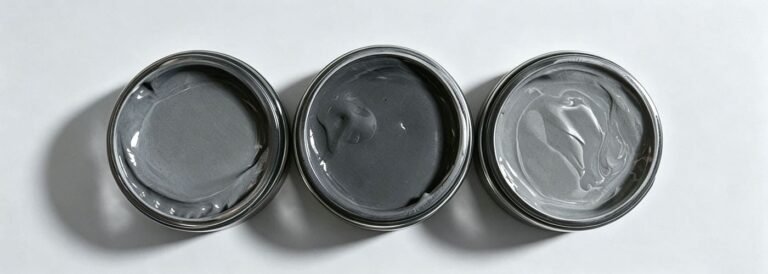
| Appearance | Grey viscous liquid |
| Phenyl content | 2.0–30.0 mol% |
| Viscosity (25°C) | 2,000–10,000,000 mPa·s |
| Low-temperature flexibility | Maintains viscoelastic behavior down to –120°C |
| Packaging | 20 kg pail / 200 kg drum |
| Shelf life | 60 months |
Phenyl content and viscosity grade are selected based on the buffer structure, piston gap geometry, pre-pressure, rated stroke, target impedance force, and service temperature. Final performance depends on formulation, buffer design, sealing structure, preload, part geometry, and validation testing — not on the material datasheet alone.
Handling characteristics and safety protocols should be confirmed according to the supplied grade SDS.
Engineering Parameters That Govern Buffer Design
When matching LR-ELS400 to a specific rail vehicle buffer, these parameters determine the selection logic:
Initial pressure (pre-load): Elastomeric paste buffers can be designed with initial pressure as low as 15–25 kN — far below the 100 kN+ of typical ring spring systems. Lower initial pressure reduces longitudinal vibration amplitude during low-speed shunting and directly affects passenger comfort.
Rated capacity: The maximum impact energy the buffer can accept within its rated stroke and impedance range. This is not only a material property — it depends on buffer design, available stroke, paste viscosity, pre-pressure, and piston flow path.
Rated impedance force: Lower impedance improves passenger comfort and reduces chassis load, but minimum impedance must be sufficient to absorb energy and complete the return stroke reliably.
Rated stroke: Longer stroke increases capacity and allows lower impedance force. In practice, stroke is constrained by vehicle structure and coupler geometry. The damping medium must be matched to the available mechanical space.
Absorption rate: The ratio of energy dissipated to total energy absorbed per impact cycle. Elastomeric paste buffer designs targeting approximately 80% absorption mean that 80% of impact energy converts to heat, and 20% drives the controlled return stroke. That balance reduces repeated longitudinal impulses through the consist.
Viscosity relative to gap geometry: The kinematic viscosity of phenyl silicone elastic putty is typically tens to hundreds of times greater than standard hydraulic oil. This reduces the dynamic sealing requirements compared with hydraulic systems, but the fit between piston gap and paste viscosity must still be engineered precisely — the impedance force curve depends on it.
Where LR-ELS400 Can Be Considered
- Rail vehicle draft gear and coupler buffers
- High-speed rail and urban transit vibration damping structures
- Bridge and infrastructure tuned mass dampers
- Closed-cavity shock absorbers for industrial or defense equipment
- Precision machinery damping systems with low-temperature requirements
In each case, the material is one part of the system. The mechanical housing, piston design, gap size, preload, sealing method, and assembly process determine whether LR-ELS400 can perform as intended.
What This Material Is Not Suitable For
Phenyl silicone elastic putty is not an exposed bumper block. It has no fixed molded geometry without containment and will cold-flow if not enclosed. It cannot function as a structural load-bearing component.
It is also not a direct drop-in replacement for hydraulic oil. LR-ELS400 requires a different piston gap, pre-pressure, and charging design to function as intended. If an existing hydraulic buffer design is already validated and sealing is reliable, that system does not necessarily need to switch.
For applications requiring a molded elastic part with defined Shore hardness, bonded joint strength, or dry open-air mounting, a vulcanized PVMQ compound is the correct starting point.
Strong polar solvent exposure and uncontrolled leakage paths should also be reviewed before selection.
FAQ
Q1: Is phenyl silicone elastic putty the same as silicone grease?
No. Silicone grease is selected for lubrication or sealing assistance. Phenyl silicone elastic putty is selected as a damping medium. Its viscosity, phenyl content, and viscoelastic behavior must be matched to a buffer structure. They serve different functions and are not interchangeable.
Q2: Can LR-ELS400 replace hydraulic oil directly in an existing buffer?
Not without redesign. LR-ELS400 has significantly higher viscosity than hydraulic oil and requires a different piston gap, pre-pressure, and charging approach. It should be evaluated as part of a new or modified elastomeric paste buffer structure, not as a fluid swap.
Q3: Why does phenyl content matter for buffer performance?
Phenyl groups increase internal molecular friction and maintain viscoelastic behavior at low temperatures. In a damping system, higher phenyl content generally raises the loss factor and extends the usable temperature range. The appropriate phenyl content depends on the operating temperature range and the buffer’s impedance targets.
Q4: What information is needed before grade selection?
Rated impact energy, rated stroke, target impedance force, initial pressure range, operating temperature range, piston orifice or gap dimensions, assembly method, and expected service environment. Without these parameters, viscosity selection is only a rough estimate.
Q5: Is this material suitable for open vibration isolation pads?
Generally no. LR-ELS400 is appropriate for closed or semi-closed damping structures. For exposed pads or molded isolation mounts, vulcanized phenyl silicone rubber or another elastomeric design is more appropriate.
If you are designing a rail transit draft gear buffer or closed-cavity shock absorber, Silfluo can review LR-ELS400 based on your mechanical parameters. Share your target impact energy, stroke, impedance force, pre-pressure range, service temperature, and cavity structure — and we can recommend a phenyl content and viscosity range for sample evaluation.
Contact Silfluo’s technical team at www.silfluo.com.