

A damping system usually fails at the medium first, not the steel housing.
Hydraulic dampers lose reliability when seals age, oil leaks, or viscosity shifts with temperature. Metal spring dampers carry load, but they also bring fatigue, wear, and high initial stiffness. Vulcanized rubber dampers are useful in many compact components, but the crosslinked network limits volumetric deformation and eventually leads to compression set or fatigue cracking under repeated loading.
Elastic putty dampers were developed for cases where the damping medium must absorb repeated impact, remain stable across wide temperature swings, and reduce maintenance requirements inside a closed mechanical structure.
This is not a soft rubber pad. It is a viscoelastic damping system.
Where the Technology Came From
Research into elastic putty–based damping materials began in Europe in the 1960s. By the 1980s, the technology had entered industrial deployment in several countries. Poland, Russia, France, and the United States developed elastic putty damper systems for industrial, rail, infrastructure, and defense equipment — applications with a common requirement: manage repeated impact or vibration where conventional hydraulic, spring, or rubber systems created reliability or maintenance problems.
Domestic development started later. Early products were mainly low-capacity systems. High-capacity dampers for high-speed rail, large bridge structures, offshore platforms, and heavy machinery required better control of viscosity stability, compressibility, thermal aging behavior, and precise damper structure matching.
The challenge was not only mechanical.
High-capacity elastic putty dampers require close matching between the damping material and the piston-cylinder structure. If paste viscosity drifts between batches, the force-displacement curve changes. If the annular gap geometry is not matched to the material’s base viscosity, the damper may become too stiff, fail to absorb target energy, or produce a dangerously slow return stroke.
Why Elastic Putty Works Differently
The damping medium in an elastic putty damper is a high-viscosity, flowable, and compressible viscoelastic compound loaded inside a sealed cavity. It is not hydraulic oil. It is not a molded elastomer. It behaves between those two states.
When the piston moves under impact, the elastic putty is compressed inside the cylinder. Part of the material is forced through an annular gap or orifice around the piston. Mechanical energy is dissipated through confined deformation, shear, and internal molecular friction. When the external load is removed, the compressed medium expands volumetrically and flows back through the restricted path, supporting the return stroke and controlling rebound.
Three material behaviors define its performance advantage.
Confined volumetric deformation. Vulcanized rubber is essentially volume-incompressible. Under compression, it deforms laterally — which creates stress concentration and initiates fatigue cracking under repeated high-load cycling. Elastic putty inside a closed cavity can redistribute energy through confined deformation and controlled flow. There is no lateral bulging, no stress concentration at the rubber-metal interface, and no crack initiation mechanism.
Velocity-dependent impedance. A spring responds to displacement. Hydraulic oil responds to flow resistance and orifice geometry. Elastic putty adds a third factor: high-viscosity viscoelastic shear. When the piston moves faster, paste shear resistance increases proportionally. A larger impact produces higher impedance; a smaller movement produces a lower response. This adaptive behavior is what makes elastic putty dampers useful in systems where both low-level vibration and large impact events occur in the same service cycle.
Wide-temperature viscoelastic stability. Standard dimethyl silicone compounds stiffen significantly below –50°C as polymer chains begin to order and pack together. Phenyl groups introduced along the siloxane backbone interrupt that chain regularity, preventing crystallization and preserving damping function down to –100°C or below. At high temperatures, the siloxane backbone resists thermal degradation where organic binders and hydraulic fluids soften or thin. This is why phenyl silicone elastic putty is specified in systems that must deliver a predictable damping curve across wide seasonal or operational temperature swings.
Why High-Capacity Systems Are an Engineering Challenge
Low-capacity damping systems are straightforward to build. High-capacity systems for rail transit, bridge structures, offshore platforms, and heavy industrial machinery are different.
The damping material must maintain stable viscosity and viscoelastic behavior under repeated shear at high load. The mechanical structure must be precise. Piston gap, orifice geometry, pre-pressure, cavity volume, sealing method, stroke, and return speed all affect the force-displacement curve — and all of them interact with the material’s viscosity.
For this reason, an elastic putty damper cannot be evaluated by a product name or a single viscosity number.
For B2B selection, the parameters that actually matter are:
- Rated impact energy and rated stroke
- Target impedance force and pre-pressure range
- Operating temperature range
- Paste viscosity range and phenyl content
- Piston gap or orifice geometry
- Cavity volume and return speed requirement
- Cyclic load and aging test conditions
Without these parameters, material selection is only a rough estimate.
Where Elastic Putty Dampers Are Used
Elastic putty dampers are reviewed for applications where hydraulic leakage, mechanical wear, compression set, or access for maintenance is a limiting factor.
Rail transit: Draft gear and coupler buffers for high-speed rail and urban transit vehicles. The buffer must control longitudinal impulses during starting, braking, coupling, and shunting — repeatedly, over a service life measured in years.
Civil infrastructure: Tuned mass dampers for bridge structures and high-rise buildings subject to wind, traffic, and seismic loading. Long maintenance intervals are a primary design requirement.
Marine and defense: Shock isolation for naval vessels, armored vehicles, and aerospace equipment. Radiation resistance of the phenyl silicone matrix is relevant for nuclear submarine and satellite applications.
Heavy industry: Mining machinery, metallurgical equipment, and offshore platforms under continuous high-amplitude vibration and repeated mechanical impact.
Each application has a different design focus. A rail draft gear buffer manages directional impulse. A bridge damper addresses low-frequency movement over decades. A mining damper must tolerate dust, contamination, and mechanical abuse. The same paste grade cannot be assumed suitable across all of these without matching to the specific mechanical parameters.
Silfluo LR-ELS400
Silfluo supplies phenyl silicone elastic putty under the designation LR-ELS400 — a phenyl-modified viscoelastic silicone compound formulated as a damping medium for closed-cavity buffer and shock absorber systems.
LR-ELS400 is not positioned as a standalone rubber component. It is a damping medium that must be matched with the damper structure.
| Parameter | Specification |
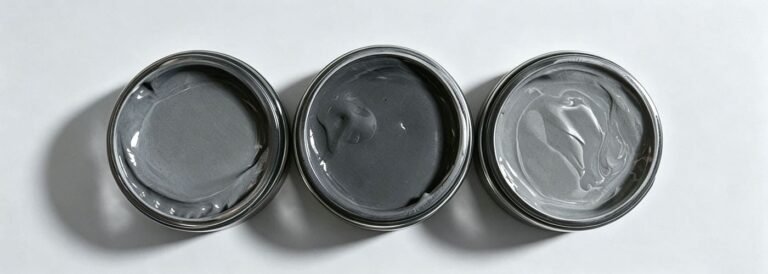
| Appearance | Grey viscous liquid |
| Phenyl content | 2.0–30.0 mol% |
| Viscosity (25°C) | 2,000–10,000,000 mPa·s |
| Low-temperature flexibility | Maintains viscoelastic behavior down to –120°C |
| Radiation resistance | Suitable for radiation exposure environments |
| Shelf life | 60 months |
| Packaging | 20 kg pail / 200 kg drum |
Phenyl content and viscosity are adjustable based on the target damping curve, service temperature, pre-pressure, and mechanical design. Final performance depends on formulation grade, damper geometry, sealing design, preload, impact profile, and validation testing.
Application Boundaries
Elastic putty requires containment. Because the material is unvulcanized and flowable, it exhibits cold flow under sustained load without a sealed housing. It cannot function as an exposed bumper block or an open vibration pad.
It is not a direct drop-in replacement for hydraulic oil. The piston gap, filling method, pre-pressure, and return stroke design must be calculated around the much higher viscosity of the putty. A damper designed for hydraulic oil cannot use elastic putty without structural redesign.
It is also not the right choice when the application requires a fixed Shore hardness, a bonded molded geometry, or structural load-bearing behavior without a housing.
Chemical compatibility should be reviewed before selection. Strong polar solvents and aggressive contact media require compatibility testing. The siloxane backbone handles non-polar hydrocarbons and ozone well, but prolonged polar solvent exposure can affect physical stability.
FAQ
Q1: What is the difference between elastic putty and hydraulic oil in a damper?
Hydraulic oil is a low-viscosity liquid that requires tight dynamic sealing under pressure. Elastic putty is a high-viscosity viscoelastic medium — typically tens to hundreds of times more viscous — that dissipates energy through confined deformation, shear, and controlled flow. It does not flow under gravity at room temperature, which reduces dynamic sealing requirements. A damper designed for hydraulic oil cannot use elastic putty without redesigning the piston gap, pre-pressure system, and sealing structure.
Q2: Can elastic putty dampers operate without a mechanical return spring?
Some designs use the compressed putty medium to support the return stroke. When external load is removed, the volumetrically compressed material expands and pushes the piston back at a controlled rate determined by the gap geometry. Whether a return spring is needed depends on pre-pressure, cavity volume, stroke, and the required return speed. This must be confirmed through buffer design validation.
Q3: Why is phenyl silicone used rather than standard dimethyl silicone?
Phenyl groups increase chain interaction and internal molecular friction under dynamic loading, which raises the loss factor and improves energy dissipation efficiency. They also disrupt the tendency of the siloxane chain to stiffen at low temperatures. Standard dimethyl silicone compounds lose damping function below –50°C. Phenyl-modified systems can maintain viscoelastic behavior significantly below that threshold. The exact performance depends on phenyl content and formulation design.
Q4: Can LR-ELS400 be used as an exposed vibration isolation pad?
No. LR-ELS400 is appropriate for closed or semi-closed cavity damping structures. For exposed pads or molded isolation mounts, vulcanized phenyl silicone rubber compounds are the appropriate starting point.
Q5: What information is needed before selecting a grade?
Rated impact energy, rated stroke, target impedance force, pre-pressure range, operating temperature, piston gap or orifice dimensions, cavity volume, return speed requirement, contact medium, and expected service environment. Without this information, viscosity and phenyl content selection is only a starting estimate.
If you are developing an elastic putty damper for rail transit, bridge structures, marine equipment, mining machinery, or heavy industrial shock absorption, Silfluo can review LR-ELS400 against your mechanical parameters before recommending a grade.
Share your rated capacity, stroke, target impedance force, pre-pressure range, service temperature, cavity geometry, and piston gap or orifice design. We will recommend a viscosity range and phenyl content for sample evaluation.
Contact Silfluo’s technical team at www.silfluo.com.