
A viscoelastic damping compound for wide-temperature vibration control — from –120°C to +250°C
Most engineers select damping materials by comparing spring rate, load capacity, and hardness. Those are reasonable starting points for standard applications. They become inadequate when the part must absorb vibration across a wide temperature range, survive millions of load cycles without maintenance, and do so without any risk of leakage or structural fatigue.
We get this question regularly from engineers working on aerospace instrument mounts, rail dampers, and military isolation systems: what do you use when hydraulic oil leaks, rubber fatigues, and springs wear out?
The answer, in most of those cases, starts with phenyl silicone elastic putty.
The Structural Limits of Conventional Damping Systems
Three material types dominate industrial vibration damping: hydraulic fluid, metal springs, and vulcanized rubber. Each has a documented failure mode when pushed beyond standard operating windows.
Hydraulic dampers dissipate energy through viscous flow and frictional heat. The mechanism works, but the sealing system is the inherent weak point. Leakage risk increases with temperature cycling and aging dynamic seals. Standard hydraulic oil also changes viscosity significantly outside a narrow temperature window, which directly alters the damping coefficient. Maintenance intervals are short, and the risk of fluid contamination in sensitive environments is persistent.
Metal spring dampers are structurally simple and predictable under static load. Under high-frequency or multi-directional vibration, they perform poorly. Springs accumulate metal fatigue, wear at contact points, and lose preload over time. For applications involving repeated impact or high-frequency resonance, they require frequent inspection and replacement.
Vulcanized rubber has the best combination of elasticity and damping among traditional materials — but the crosslinked network introduces a critical physical constraint: vulcanized rubber is essentially volume-incompressible. Under compressive load, it must deform laterally rather than absorbing energy through genuine volume reduction. That lateral bulging creates stress concentrations at the rubber-metal interface. Under continuous dynamic loads, the result is fatigue cracking, permanent compression set, and oxidative aging. In demanding environments, service life is typically one to two years.
The common thread: all three systems are eventually limited by their sealing interface, their mechanical wear behavior, or the physical constraints of a crosslinked polymer network.
The Material Mechanism: What Unvulcanized Phenyl Silicone Does Differently
Phenyl silicone elastic putty uses the same siloxane backbone as standard silicone rubber — but without the crosslinked network that defines vulcanized elastomers.
Removing crosslinks changes the material behavior in two fundamental ways.
First, the material becomes volume-compressible. Unlike vulcanized rubber, an uncrosslinked high-viscosity putty absorbs energy through genuine volumetric compression within a confined space. There is no lateral bulging, no stress concentration at the interface, and no crack initiation mechanism. This is why elastic putty maintains its energy dissipation capacity across millions of load cycles where vulcanized rubber does not.
Second, the viscoelastic response is controlled by phenyl substitution. This is the part that determines whether a phenyl silicone putty actually damps well — or just sits there.
In a standard dimethylsiloxane chain, the methyl side groups are small and compact. The chain moves relatively freely, which is why standard silicone has low internal friction and a correspondingly low loss factor (Tan δ). Phenyl groups are bulkier. When introduced along the siloxane backbone, they increase steric hindrance between adjacent chain segments. Under dynamic loading, that restricted chain mobility forces molecular segments to work against each other — dissipating mechanical energy as heat. The higher the phenyl content, the higher the loss factor, and the more energy the material converts per cycle.
Higher phenyl content also disrupts the crystallization tendency of the siloxane chain at low temperatures. Standard methyl silicone rubber stiffens significantly below –50°C as the polymer chains begin to order. The bulky phenyl groups interrupt that structural regularity. The result is a material that retains its viscoelastic behavior well below –60°C — and in high-phenyl formulations, maintains flexibility down to –120°C.
That combination — volume compressibility, high Tan δ through steric hindrance, and cryogenic flexibility — is what separates phenyl silicone elastic putty from standard methyl silicone greases and vulcanized rubber pads.
Silfluo LR-ELS400
We supply phenyl silicone elastic putty under the designation LR-ELS400.
| Parameter | Specification |
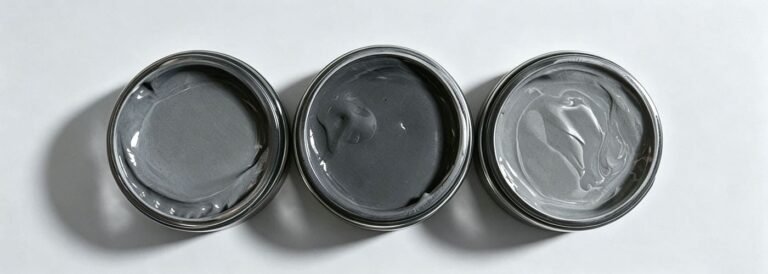
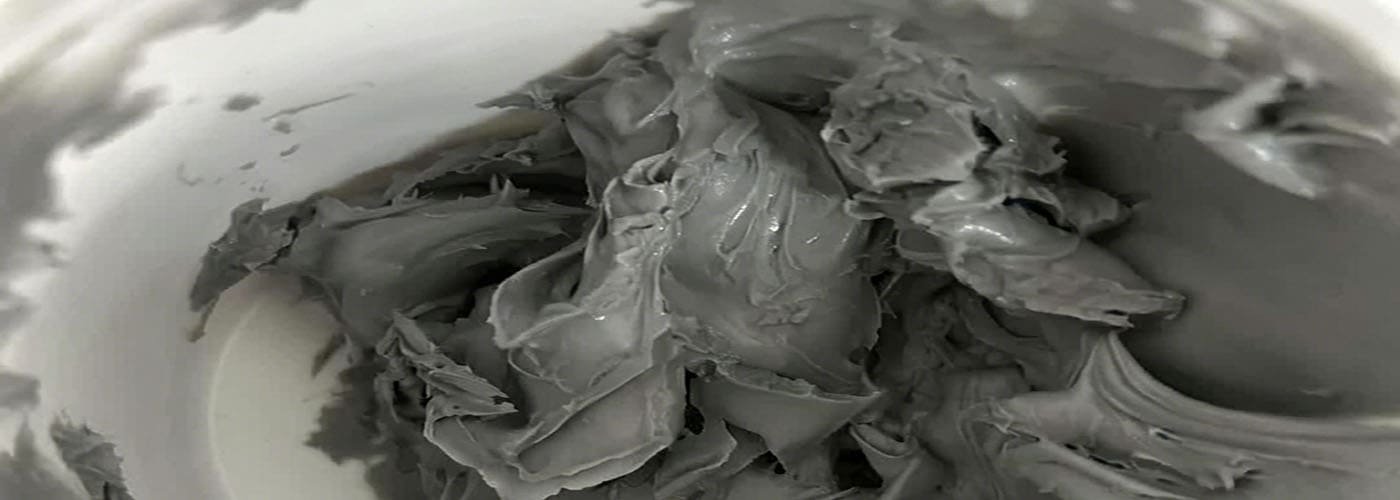
| Appearance | Grey viscous liquid |
| Phenyl content | 2.0–30.0 mol% |
| Viscosity (25°C) | 2,000–10,000,000 mPa·s |
| Low-temperature flexibility | Maintains viscoelastic behavior down to –120°C |
| Radiation resistance | Suitable for environments with radiation exposure |
| Shelf life | 60 months |
| Packaging | 20 kg pail / 200 kg drum |
Phenyl content and viscosity are both adjustable. Higher phenyl content raises the damping coefficient and extends low-temperature performance; viscosity selection depends on enclosure geometry, load type, and frequency range. Final performance should be confirmed through application-level testing — the parameters above are starting points, not guaranteed outcomes for every design.
Where This Material Is Used
LR-ELS400 is specified when conventional dampers fail on temperature range, cannot sustain long maintenance-free service, or require a medium that conforms to irregular internal geometries without a precision-machined housing.
Aerospace and defense: Inertial guidance systems, instrument mounts, and avionics packages that must absorb micro-vibration across temperature swings from ambient to below –60°C. The radiation resistance of the phenyl ring also makes it relevant for nuclear submarine components and satellite assemblies.
Rail and infrastructure: Tuned mass dampers for high-speed rail bogies and bridge vibration control, where the damping medium is subjected to continuous low-amplitude, high-frequency excitation over a service life measured in years.
Military and impact protection: High-energy impact absorption in body armor and equipment enclosures where the material must remain functional after repeated shock loading at sub-zero temperatures.
What It Is Not Suitable For
LR-ELS400 is an unvulcanized viscoelastic putty. It is not a structural element and cannot replace components designed to carry load or maintain fixed geometry without a housing.
It must be enclosed in a closed or semi-sealed mechanical cavity — a dashpot, buffer chamber, or equivalent. If placed between two flat surfaces without lateral containment, continuous dynamic load will eventually cause the putty to migrate out through cold flow. The cavity does not require the tight-tolerance dynamic sealing of a hydraulic system, but containment geometry must be designed to prevent gradual material displacement under sustained compression.
It is also not the right choice for applications involving prolonged contact with strong polar solvents — ketones, esters, concentrated acids. The siloxane backbone handles non-polar hydrocarbons and ozone well, but direct polar solvent exposure can affect long-term physical stability.
If your application requires a defined Shore hardness, fixed post-cure geometry, or a bonded joint with structural peel strength, a vulcanized PVMQ compound or a phenyl RTV base polymer is the correct starting point — not this material.
When to Consider LR-ELS400
Evaluate this material when your system meets the following conditions:
- The application requires volume compressibility that solid rubber cannot provide
- Hydraulic leakage in the operating environment would be a safety or contamination risk
- The required temperature range extends below –50°C, above 200°C, or both
- The enclosure design allows the medium to be contained within a cavity
- Multi-year maintenance-free service life is a design requirement
If those conditions apply, LR-ELS400 is worth evaluating. If the application is a standard ambient-temperature mount with no unusual thermal, chemical, or radiation exposure, a conventional vulcanized silicone compound is likely sufficient and more cost-effective.
FAQ
Q1: What is the difference between phenyl silicone elastic putty and standard silicone grease?
Standard silicone grease or methyl putty has low phenyl content or none. The loss factor (Tan δ) is significantly lower, and low-temperature performance drops sharply below –50°C. Phenyl silicone elastic putty is formulated specifically for high-energy dissipation and cryogenic flexibility. They are not interchangeable in critical vibration damping applications.
Q2: Can LR-ELS400 be used in radiation environments?
Yes. Phenyl groups absorb high-energy radiation more effectively than methyl groups, which is why phenyl silicone materials are evaluated for nuclear and aerospace radiation environments. Specific dose tolerance depends on phenyl content and cumulative exposure conditions. Testing under the target radiation environment is recommended for safety-critical applications.
Q3: Is the material pumpable or injectable for cavity filling?
Viscosity spans 2,000 to 10,000,000 mPa·s depending on grade. Lower-viscosity grades can be pumped and dispensed into cavities using automated equipment. Higher-viscosity grades behave more like a stiff paste and are typically hand-packed or press-fitted. Grade selection depends on assembly method and cavity geometry.
Q4: How does phenyl content selection affect performance?
Higher phenyl content raises the loss factor and extends low-temperature flexibility, but also alters flow behavior and the upper thermal stability limit. For most damping applications, the starting point is the operating temperature range and the dominant vibration frequency. We can assist with grade recommendation based on those inputs.
If you are designing a closed-cavity damper and need stable energy dissipation below –60°C, radiation tolerance, or maintenance-free service across a multi-year lifespan, LR-ELS400 is worth a closer look.
Reach out to Silfluo’s technical team at www.silfluo.com with your service temperature range, vibration frequency profile, and enclosure geometry. We will recommend a grade or arrange a sample for your validation testing.