
A silicone rubber part can pass a 72-hour heat-aging test and still shatter during cold start.
This is a recurring and expensive mistake in elastomer selection. Standard VMQ silicone rubber is routinely specified because it handles heat better than most organic rubbers. But heat resistance alone says nothing about how the polymer network behaves when temperature drops sharply, spikes rapidly, or cycles aggressively between two extremes.
For seals, wire insulation, dampers, and molded components, the engineering question is not only whether the rubber survives high heat.
The real question is: does it retain elastic recovery after thermal shock?
This is the specific condition for which PVMQ — phenyl vinyl methyl silicone rubber — is deployed. It is not a generic upgrade from VMQ. It is specified when standard VMQ cannot provide the low-temperature flexibility, thermal cycling stability, or dynamic damping required under severe temperature swings.
Why Standard VMQ Reaches Its Limits
Standard VMQ silicone rubber is built on dimethylsiloxane units. This base structure provides adequate flexibility and thermal stability for most general industrial applications within a moderate temperature window.
Under extreme thermal conditions, the molecular chain behavior becomes the limiting factor.
At cryogenic temperatures, dimethylsiloxane chains lose mobility. They pack closely together and begin to crystallize. The rubber may look physically intact, but sealing force, rebound rate, and bending flexibility drop sharply. In a static seal, this causes cold-start leakage. In a cable jacket, it causes cracking during flexure at installation or during a cold winter startup. In a damper, the part loses viscoelastic energy dissipation entirely.
Thermal cycling introduces a different failure mode. Repeated thermal expansion and contraction stresses the crosslink network, accelerating compression set accumulation and fatigue. A part that meets specification on initial delivery may fail after six months of service cycling.
VMQ is still useful for many applications. It is not always sufficient for these conditions.
What Phenyl Groups Change in PVMQ
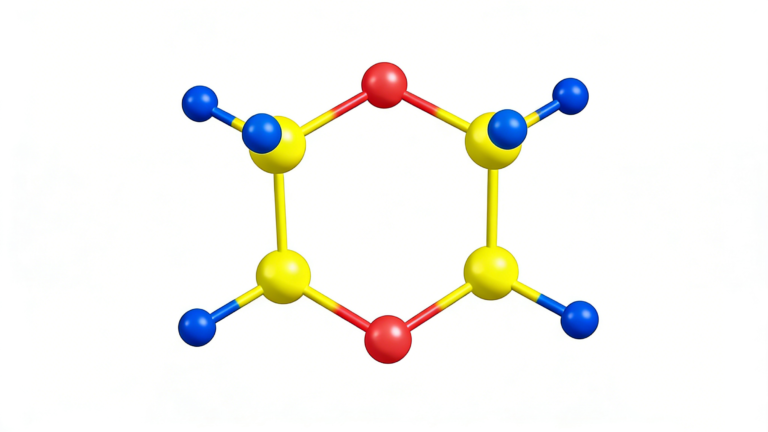
PVMQ is synthesized by introducing phenyl groups onto the siloxane backbone alongside methyl and vinyl groups. This structural modification changes how the polymer responds to deep cold and dynamic stress.
Phenyl groups are bulky aromatic rings. When attached to the siloxane chain, they create steric hindrance — physical obstacles that disrupt the regular packing of adjacent chain segments. This prevents the polymer from crystallizing and stiffening under freezing conditions. That is the mechanism that allows PVMQ to maintain low-temperature flexibility where standard VMQ turns rigid.
The vinyl groups remain available as crosslinking sites during curing. The phenyl groups themselves do not participate in the cure reaction — they modify chain geometry and mobility.
At elevated temperatures, the aromatic ring structure is more thermally stable than a methyl group under sustained heat. Combined with the siloxane backbone’s inherent oxidative resistance, this slows crosslink degradation after prolonged heat exposure. The engineering result is lower compression set after heat aging and more stable elastic recovery through repeated thermal cycles.
Phenyl content determines how far these effects extend. Higher substitution pushes the low-temperature limit further downward. It also changes cure kinetics and processing behavior. Phenyl content must be matched to the service condition and validated at compound level.
What Thermal Shock Actually Requires from the Material
Thermal shock is mechanically different from steady-state heat exposure.
A part in a static oven degrades through oxidation and slow crosslink breakdown. A part exposed to thermal shock must survive rapid dimensional changes, sudden modulus shifts, and intense stress at material interfaces — all in a short time window.
For PVMQ parts in thermal shock environments, the relevant design targets are:
- Elastic recovery immediately after cold exposure
- Stable compression set across repeated heat-cold cycles
- Retention of damping function without brittle fracture at low temperature
- Low-temperature bending resistance without surface cracking
A part that passes room-temperature mechanical tests but has not been validated under the actual thermal profile is not confirmed for service.
Where PVMQ Is Commonly Specified
Aerospace and defense components. Flight profiles combine deep cold, severe vibration, and rapid thermal cycling. PVMQ is evaluated for aerodynamic seals, instrument gaskets, and isolation dampers where standard VMQ stiffens at altitude or during ground-level cold start.
Industrial wires and cables. Motor lead wires, instrumentation cabling, and appliance wiring must remain flexible during installation and throughout repeated service cycles. Hardening after heat aging or cracking during a cold startup are reliability failures that standard VMQ can introduce in demanding installations.
Rollers and office automation components. Fuser rollers in heavy-duty printers experience localized heat, sustained pressure, and continuous rotation. PVMQ is considered when elastic recovery and dimensional stability over service life exceed what a standard VMQ compound can maintain.
Vibration dampers and shock isolation. Phenyl groups increase internal chain interaction and viscoelastic energy dissipation. For closed-cavity dampers and precision equipment mounts, PVMQ maintains a more stable damping curve across a wider thermal range than standard elastomers.
Where PVMQ Is Not the Right Choice
PVMQ does not solve every elastomer problem.
If the application involves exposure to automotive fuels, jet fuel, or non-polar hydrocarbon oils, fluorosilicone rubber (FVMQ) is the correct starting point. The fluoroalkyl groups in FVMQ limit swelling in non-polar media. PVMQ provides no meaningful resistance to those environments.
If the failure mode is mechanical — tearing from sharp geometry, adhesion failure, processing defects — switching from VMQ to PVMQ will not address the root cause.
If the application operates in a moderate, stable temperature range without aggressive cycling or cryogenic exposure, standard VMQ is the more cost-effective and technically sufficient choice.
FAQ
Q1: What exactly is PVMQ silicone rubber?
PVMQ stands for phenyl vinyl methyl silicone rubber. The inclusion of phenyl groups on the siloxane backbone changes low-temperature flexibility, thermal shock resistance, and viscoelastic damping behavior compared with standard VMQ.
Q2: Can PVMQ be used in fuel or oil environments?
No. PVMQ is not designed for non-polar solvent or fuel exposure. If hydrocarbon swelling is the failure mode, fluorosilicone rubber (FVMQ) or FKM must be evaluated depending on temperature and chemical type.
Q3: What data is needed to select a PVMQ grade?
Minimum service temperature, maximum service temperature, thermal cycling profile, compression set requirement, contact medium, part geometry, wall thickness, cure method, and dynamic loading condition if applicable.
Q4: Is PVMQ harder to mold than standard VMQ?
Not inherently, but PVMQ should be processed according to its specific compound design. Phenyl content, filler system, and cure chemistry change the thermal response and scorch behavior. The molding window must be validated for the grade and part geometry, not assumed from a standard VMQ process.
If you are evaluating elastomers for high-low temperature shock resistance, Silfluo can review the material route based on your actual service conditions.
Provide your minimum service temperature, peak heat exposure, thermal cycle frequency, compression set requirement, contact medium, and part geometry. We will assess whether a specific PVMQ phenyl content, FVMQ, or optimized VMQ system is the appropriate starting point for your validation testing.
Contact Silfluo’s technical team at www.silfluo.com.