
A silicone rubber part can pass a heat-aging test and still fail during cold start.
This is common in seals, gaskets, damping parts, wire insulation, and molded components exposed to thermal cycling. The part may look acceptable at room temperature. When the temperature drops, rebound changes. When heat returns, compression set increases. After repeated cycles, the part no longer maintains sealing force, damping behavior, or dimensional stability.
Standard VMQ silicone rubber handles most general heat-resistant applications. It becomes limited when the working condition includes deep cold, rapid temperature change, long-term cyclic compression, or a need for more stable elastic recovery after heat aging.
PVMQ — phenyl vinyl methyl silicone rubber — is selected for these conditions because phenyl groups change the behavior of the siloxane chain.
What PVMQ Is
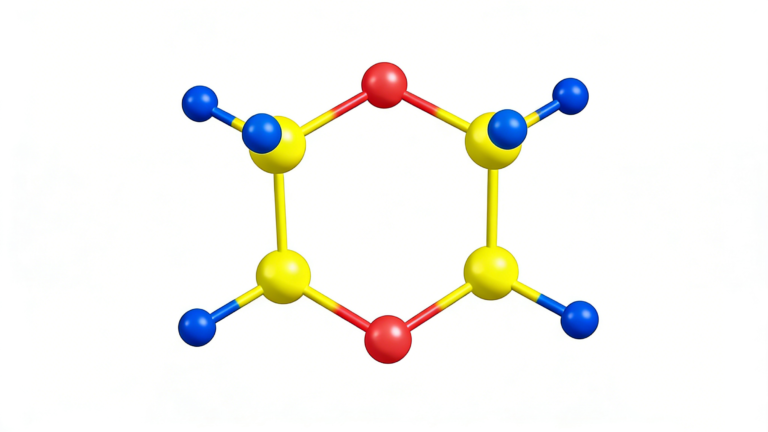
PVMQ is a phenyl-modified silicone rubber based on a siloxane backbone containing methyl, vinyl, and phenyl groups. The vinyl groups provide reactive sites for curing. The phenyl groups modify low-temperature flexibility, viscoelastic behavior, and thermal-aging response compared with standard dimethyl silicone rubber.
PVMQ should not be selected only because it sounds more specialized than VMQ. It is useful when the failure mode is specifically linked to low-temperature stiffening, thermal cycling, compression set after heat aging, or damping behavior under changing temperature conditions.
Why Phenyl Substitution Changes the Performance Window
Standard VMQ gets its flexibility from the high rotational freedom of the Si-O-Si backbone. At low temperatures, regular dimethylsiloxane chains lose mobility. They pack closely together and begin to crystallize. The rubber stiffens, loses rebound, and may fracture under compression or bending load.
Phenyl groups interrupt this regularity.
The phenyl ring is bulkier than a methyl group. When introduced along the siloxane chain, phenyl groups create steric hindrance between adjacent chain segments — they physically prevent the chains from packing into an ordered structure at low temperature. That is the structural reason PVMQ retains flexibility where standard VMQ turns rigid.
At elevated temperatures, phenyl substitution contributes to thermal stability through a different mechanism. The aromatic ring structure is more thermally stable than a methyl group under sustained heat exposure. Combined with the siloxane backbone’s inherent oxidative resistance, this slows crosslink degradation and chain rearrangement, which translates to lower compression set after heat aging and more consistent elastic recovery over the service life of the part.
The practical effect depends on phenyl content. Higher phenyl substitution shifts the low-temperature flexibility limit further downward and increases refractive index. It also changes cure kinetics and processing behavior. Phenyl content should be matched to the actual service condition, not maximized by default.
When PVMQ Is the Right Choice
Low-temperature sealing and flexibility. If the application requires elastic recovery below –50°C — aerospace components, cryogenic instrumentation, outdoor equipment in cold climates — standard VMQ may stiffen beyond functional limits. Specific low-temperature flexibility values depend on grade and phenyl content and should be confirmed through compound-level testing.
Thermal cycling under compression. Motors, industrial ovens, power generation equipment, and heating systems expose rubber parts to repeated temperature swings. Each cycle stresses the crosslink network and accelerates compression set accumulation. PVMQ’s more stable chain conformation under thermal load slows this process, helping maintain sealing force or damping function longer than standard VMQ under the same cycling profile.
Vibration damping and shock-absorbing parts. Phenyl groups increase internal chain interaction and support viscoelastic energy dissipation in selected compound designs. For vibration dampers, shock mounts, and dynamic molded parts where rebound and damping must remain stable across temperature changes, PVMQ is the appropriate starting point.
Wire, cable, and insulation components. PVMQ is reviewed for motor lead wires, instrumentation cabling, and internal electrical components exposed to repeated heat and cold movement. Electrical performance, flame behavior, and applicable compliance standards must be confirmed separately for each application.
Optical and high-refractive-index applications. High-phenyl grades produce a refractive index above standard dimethyl silicone systems, which is relevant for optical encapsulants and refractive-index matching applications. Transparency, yellowing, and bubble control must be validated at compound level.
When PVMQ Is Not the Right Starting Point
PVMQ is not a universal upgrade from standard VMQ.
If the primary failure mode is fuel swelling, oil resistance, or hydrocarbon solvent exposure, fluorosilicone rubber (FVMQ) is the correct material to evaluate. PVMQ does not provide the swelling resistance that fluoroalkyl side groups deliver in non-polar media.
If the application involves aggressive chemical exposure beyond hydrocarbon fuels, FKM may be more appropriate depending on chemical type and temperature.
If the application is cost-sensitive, operates within a moderate temperature range, and does not involve deep cold or aggressive thermal cycling, a well-formulated VMQ is the practical choice. Phenyl content increases raw material cost, and that cost is not justified when the thermal conditions do not require it.
If the part is tearing mechanically, showing adhesion failure, or producing bubbles during molding, the issue is more likely related to part geometry, mold design, surface preparation, or cure process. Switching to PVMQ will not fix a mechanical or process problem.
Material selection should begin with the failure mode.
Parameters to Confirm Before Inquiry
Before selecting a PVMQ grade, confirm:
- Service temperature range: minimum, maximum, and thermal cycling profile
- Compression set requirement: test temperature, duration, and acceptance value
- Low-temperature flexibility requirement: test standard and pass criterion
- Hardness range
- Tensile strength and elongation requirement
- Tear strength requirement
- Rebound or damping behavior, if dynamic loading is involved
- Contact medium: fluid, vapor, or chemical exposure
- Cure method: peroxide or addition cure, and post-cure requirement
- Part geometry and maximum wall thickness
- Bonding or insert-molding requirement
- Electrical, flame, or optical requirement, if applicable
Final performance depends on formulation, phenyl content, filler system, cure conditions, part geometry, and application testing. Grade recommendations should be based on compound-level data, not on polymer type alone.
FAQ
Q1: What is the difference between VMQ and PVMQ?
VMQ is standard dimethyl silicone rubber. PVMQ contains phenyl groups substituted along the siloxane backbone. These phenyl groups disrupt chain regularity, improving low-temperature flexibility and thermal stability under cyclic loading. The trade-off is higher raw material cost and different cure kinetics. PVMQ is not better than VMQ in all conditions — it is specified when temperature-driven elasticity loss is the failure mode.
Q2: How low a temperature can PVMQ handle?
This depends on phenyl content and compound formulation. Higher phenyl substitution shifts the low-temperature flexibility limit further downward. The specific value should be confirmed through testing of the actual compound and part geometry, not taken from a general material category description.
Q3: Can PVMQ replace FVMQ or FKM in fuel-contact applications?
No. PVMQ does not provide meaningful resistance to non-polar fuels, hydrocarbon oils, or related solvents. For fuel system seals, diaphragms, or O-rings, FVMQ or FKM is the correct starting point depending on temperature and flexibility requirements.
Q4: Does PVMQ require special molding equipment?
PVMQ can generally be processed with conventional silicone rubber compression or injection molding equipment, depending on compound design. Cure time, mold temperature, post-cure conditions, and blank placement should be validated for the specific grade and part geometry. The PVMQ molding window should not be assumed to match a standard VMQ process.
Q5: How should phenyl content be selected?
Phenyl content should be matched to the minimum service temperature, compression set target, damping behavior requirement, and processing window. Higher phenyl content is not always better — it affects viscosity, cure kinetics, cost, and in some cases optical properties.
If you are selecting PVMQ for seals, gaskets, damping parts, insulation, or optical silicone applications, Silfluo can review the material route before sample preparation.
Share your service temperature range, thermal cycling profile, compression set requirement, target hardness, part geometry, contact medium, cure method, and any electrical or optical requirement. We will recommend a phenyl content range and formulation direction for evaluation.
Contact Silfluo’s technical team at www.silfluo.com.