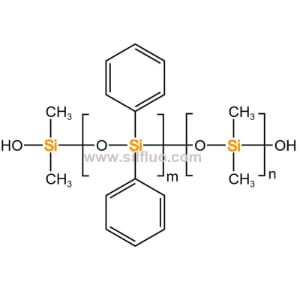

High Viscosity: [(CH3)2SiO]x[(C6H5)2SiO]Y[CH3C2H3SiO]Z[(CH3)3Si]2
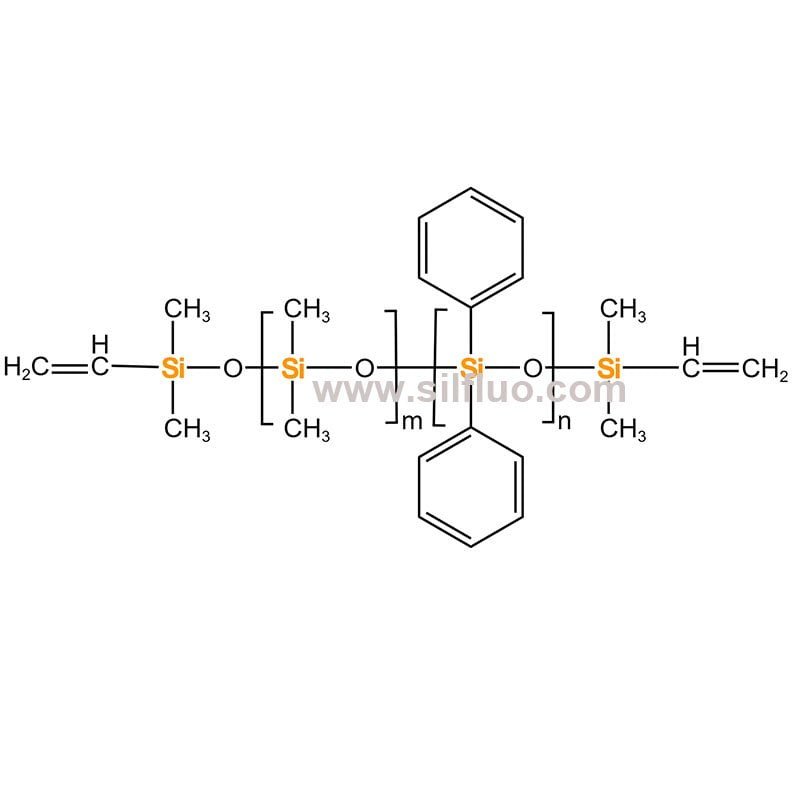
Liquid: [C2H3(CH3)2Si]2O[(CH3)2SiO]m[(C6H5)2SiO]n
Special Features:
When standard silicone fails due to freezing temperatures (below -50°C) or high radiation exposure, PVMQ is the only elastomer that ensures reliability. In addition to a series of characteristics of vinyl silicone rubber, this product also has:
- Low Phenyl Content (5% ~ 10%)
Primary Characteristics: Extreme Low-Temperature Flexibility
Mechanism:
The introduction of bulky phenyl groups disrupts the regularity of the siloxane polymer chain. This steric hindrance effectively inhibits crystallization at low temperatures, preserving the material’s elasticity.
Key Specifications:
Glass Transition Temperature (Tg): Can reach as low as -115°C.
Service Temperature Range: -100°C to +230°C.
(Note: Standard silicone rubber typically stiffens and embrittles at -50°C.)
Applications:
Aerospace seals (high-altitude/low-temperature environments), cryogenic seals, and equipment for polar expeditions.
- High Phenyl Content (20% ~ 50%+)
Primary Characteristics: Radiation Resistance & Optical Properties
Mechanism:
The high concentration of phenyl rings provides exceptional electron density and conjugation effects, creating a stable chemical structure that absorbs energy.
Key Specifications:
Radiation Resistance: Capable of withstanding high doses of Gamma rays without significant degradation or aging.
High Refractive Index (RI): Adjustable range from 1.43 to 1.54.
High Damping: High internal molecular friction results in superior vibration damping and shock absorption capabilities.
Applications:
Seals for nuclear power plants, components for X-ray equipment, and materials for optical lenses/sensors.