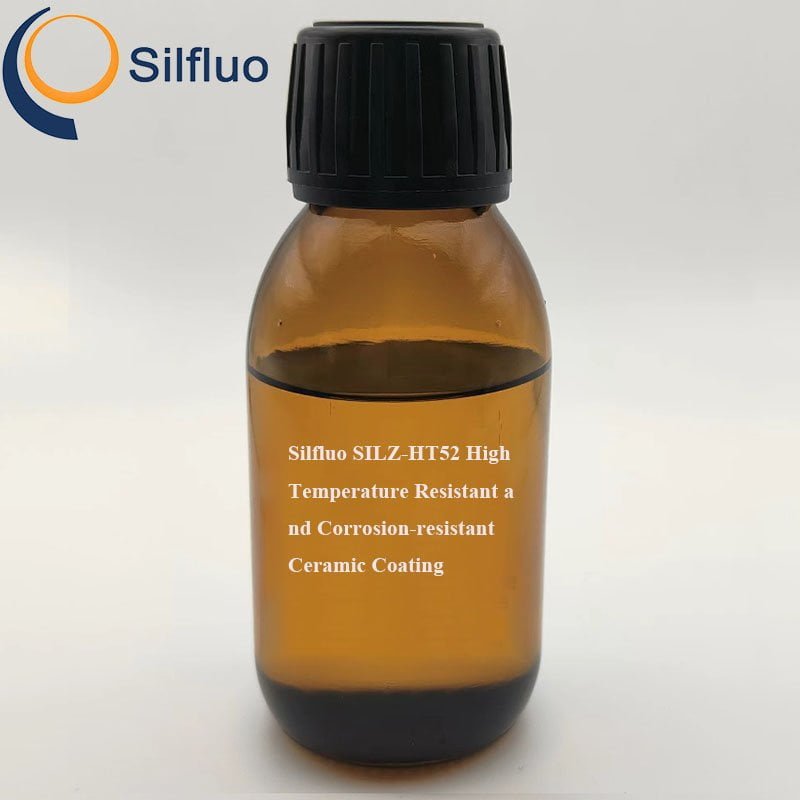
SILZ-HT52 is designed for severe service environments requiring ultra-high-temperature resistance and long-term corrosion protection. Based on polysilazane-derived ceramic conversion technology, the coating forms a dense inorganic ceramic layer after curing, providing reliable protection for metal substrates under extreme thermal loads.
Typical applications include ultra-high-temperature furnaces, metallurgical equipment, petrochemical cracking units, high-temperature reactors, exhaust and combustion systems, aerospace thermal components, and other equipment exposed to extreme heat, abrasion, and corrosive environments.
Application & Curing Parameters
| Item |
Value |
Curing Condition |
Requirement |
| Theoretical Coverage (m²/kg) |
8–15 |
High-temperature curing (260°C or 500°C) in air |
1 h |
| Dry Film Thickness (µm) |
10-40 |
Curing via temperature rise curve (under nitrogen) |
Contact us for details |
| Pot Life (h) |
12 |
Max Instant Temperature (°C) |
1300 |
| Diluents |
Aromatics, lipids, ethers, etc. |
Recommended Service Temp (°C) |
-30 to 800 |
| Flash Point(°C) |
<22 (solvent flash point) |
Storage Temp (°C) |
0–30 |
Special Notes: This product is a two-component thermosetting product. Mixed coatings should be used within 12 hours. For longer application times, clean application tools thoroughly to prevent them from hardening. The dry film thickness should not exceed 35µm; otherwise, coating performance will decrease.
Standard Processing Procedure: Surface Cleaning → Roughening → Cleaning and Blowing → Spraying/Scraping → Curing
Instruction Manual
- Roughening: Before coating, grind or sandblast the substrate surface to remove rust, dust, dirt, etc. Roughening significantly affects the coating effect; optimal Sa2.5, minimum St3 (no oxide scale) (GB/T 30790.4-2014), so please pay close attention.
- Cleaning: Use a specialized cleaner or degreaser to remove residual oil, dust, etc., from the roughened surface.
- Substrate Drying: Ensure the substrate surface is dry and clean before coating.
- Coating Mixing: This product is a two-component product. Take an appropriate amount of coating according to the mixing ratio and mix thoroughly. Filter through a 180-mesh filter before use.
- Coating Application: For laboratory spraying, a 1.0-caliber spray gun will provide better appearance and uniformity.
- Curing: Air curing has a maximum temperature resistance of 700℃, while nitrogen curing has a maximum temperature resistance of 1300℃ (please consult for nitrogen curing conditions).